Understanding Dog Body Language: 2026 Guide
Dog Training, Dog Body Language, Brooklyn NY
Understanding Dog Body Language: What It Means as Your Dog Matures (2026 Guide)
By MJackson, Certified Dog Trainer | MJacksonk9
Note: This content is for informational purposes. Always consult a certified veterinarian or professional trainer for behavioral concerns.
If you’ve ever looked at your dog and thought, “I wish you could just tell me what you’re thinking,” you’re not alone. The good news is, your dog actually is talking to you all the time — just not with words. Through dog body language, posture, facial expressions, and movement, your pup is constantly sending dog signals about how they feel, what they need, and whether they’re comfortable or stressed, especially as they grow and mature.
Why Understanding Dog Body Language Matters
In a busy place like Brooklyn — with crowded sidewalks, noisy streets, and lots of other dogs — understanding your dog isn’t just “nice to have.” It’s a safety and relationship essential. When you get better at reading your dog’s body language, you can:
- Step in early when your dog is overwhelmed, before they bark, lunge, or snap.
- Support shy or anxious dogs so they feel safer in new situations and around strangers.
- Build deeper trust, because your dog learns that you “listen” when they communicate.
The American Kennel Club has a great overview of how to read dog body language, and it lines up with what we see every day working hands-on with dogs here at MJacksonk9 dog training. When you understand how dogs communicate, you’re able to respond in a way that feels fair and predictable to your pup — and that’s where real behavior change starts.
How Puppies Communicate vs. Adult Dogs
Puppy body language can feel like a whirlwind. One minute they’re bouncing off the walls, the next they’re flopped on the floor, fast asleep. Their bodies are still growing, and their social skills are very much under construction. That means their dog signals are often big, exaggerated, and sometimes clumsy — think wiggly butts, oversized paws, and dramatic play bows.
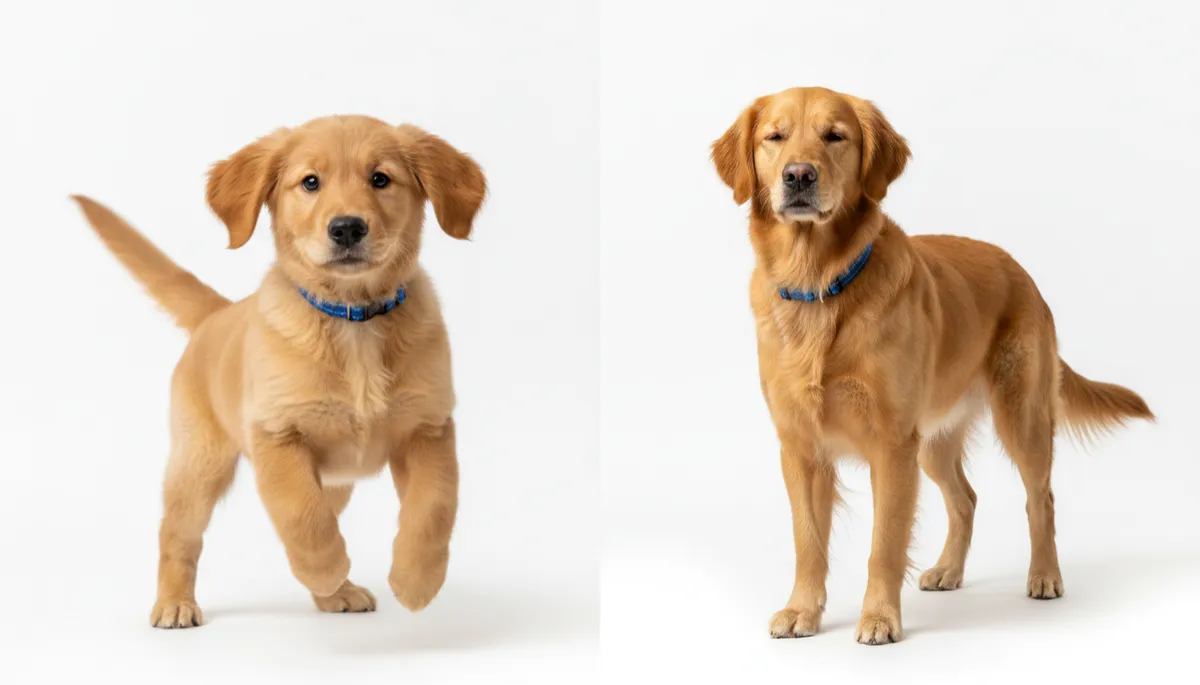
Puppy body language is big and bouncy; adult dogs tend to be more subtle.
Adult dogs, especially as dog maturity sets in around two to three years old, usually communicate with more subtle shifts: a small weight shift backward, a brief hard stare, a tighter mouth. The feelings are the same — excitement, worry, curiosity, irritation — but the way they show up in the body is often less dramatic than in puppies. That’s why many owners say, “This came out of nowhere,” when really, the dog had been whispering with their body for a while.
If you’re just starting out with a new puppy, consistent socialization and clear communication are huge. Our puppy classes at MJacksonk9 are designed to help you learn puppy body language in real time so you can guide your little one into confident, polite adulthood.
Reading Your Dog's Body Language: Key Signals to Know
Let’s break down some of the major “chapters” in your dog’s body language story. No single signal tells the whole truth — you always want to look at the full picture of dog behavior, the environment, and your dog’s personality. But these are some of the big ones to watch:
1. Tail position and movement
- Loose, medium-height wag: Generally relaxed and friendly, especially if the rest of the body is soft.
- Fast, tight wag held high: High arousal — could be excitement, could be agitation. Check the face and body.
- Tail tucked low or under: Fear, anxiety, or discomfort, especially if paired with a lowered body.
2. Ears, eyes, and mouth
- Soft eyes, blinking, relaxed mouth: Your dog is likely calm and content, taking the world in comfortably.
- Wide eyes, whites showing (“whale eye”): Stress, worry, or feeling trapped. Time to give space or change the situation.
- Lips pulled back, teeth showing, stiff body: Clear warning; your dog may bite if pushed further.
3. Overall posture and movement
- Play bow (front down, butt up, loose body): Classic “let’s play!” signal, especially in younger dogs.
- Leaning forward, weight on toes, stiff: High alert, possibly moving toward confrontation or chase.
- Crouched, leaning away, avoiding eye contact: Fearful or unsure; your dog may need distance or reassurance.
What Changes as Your Dog Matures
Just like people, dogs don’t stay the same forever. As your dog moves from puppyhood into adolescence and adulthood, their body language, energy level, and social preferences naturally shift. That’s normal dog maturity, not “stubbornness” or “meanness,” even though it can feel like that sometimes from the human side.
- Less all-out play, more selective socializing: Many adult dogs become choosier about which dogs they want to interact with, and their dog signals around other dogs may be more subtle but firmer — a hard stare, a still body, or walking away instead of wrestling.
- Clearer boundaries: That older dog who growls at a rude puppy isn’t “bad”; they’re teaching manners. Mature dogs often use very clear body language to say “too much” or “back off,” especially with younger dogs or grabby humans.
- Age-related changes: Senior dogs may move more slowly, react more strongly to being startled, or avoid busy areas. Pain, hearing loss, or vision changes can all affect how dogs communicate and respond.
Resources like the ASPCA’s behavior pages or VCA Hospitals’ behavior guides are great references if you’re noticing new behaviors as your dog ages. But if your dog’s body language suddenly shifts — especially if they go from relaxed to tense or reactive — a vet check is always step one to rule out pain or medical issues.
Common Misread Signals (And What They Really Mean)
One of the biggest challenges in reading your dog’s body language is that humans tend to interpret dog behavior through a human lens. Here are a few signals that are often misunderstood:
- “He’s guilty.” That cowering posture, tucked tail, and squinty eyes when you come home to a chewed shoe? That isn’t guilt — it’s fear and appeasement. Your dog is reacting to your tone and body language in the moment, not “remembering” what they did hours ago.
- “She’s being dominant.” Many dogs who bark or lunge on leash are actually anxious or frustrated, not trying to be “in charge.” Their stiff posture and intense focus are often rooted in insecurity, not confidence.
- “He’s fine; his tail is wagging.” Remember: a wagging tail just means arousal, not necessarily friendliness. Always read the rest of the body — soft and curvy is usually safe; stiff and tight is a red flag.
Working with a professional trainer who understands how dogs communicate can help you decode these mixed messages and respond in a way that actually helps your dog. Our obedience and behavior programs at MJacksonk9 are built around teaching both ends of the leash — you and your dog — to communicate clearly and kindly.
Key Takeaways
- Dog body language is your dog’s main language. When you learn to read it, everything from walks to vet visits gets easier and safer.
- Puppy body language is big and dramatic; adult dogs often communicate more quietly and subtly, especially as they mature.
- Always read the whole dog, not just one signal. Tail, eyes, ears, mouth, and posture all work together to tell the story of how your dog feels.
- Dog maturity brings changes in behavior and communication. That doesn’t mean your dog is “turning bad”; it means their needs and boundaries are evolving.
- Professional support makes a big difference. A trainer who focuses on understanding your dog’s signals can help you respond in ways that build trust instead of tension.
Frequently Asked Questions
How can I tell if my dog is anxious?
Common anxiety signals include panting when it’s not hot, pacing, lip licking, yawning outside of nap time, tucked tail, pinned ears, and avoiding eye contact. Some dogs also cling to you or try to hide behind you. If you notice these dog signals regularly, especially in certain situations (like on busy streets or around other dogs), your dog may be feeling overwhelmed and needs more distance, structure, or training support.
What does it mean when a dog's tail is wagging?
A wagging tail simply means arousal — your dog is emotionally “turned on” by something. That could be happiness, excitement, frustration, or even aggression. Look at the height, speed, and looseness of the wag, and always check the rest of the body. A low, loose wag with a wiggly body is usually friendly; a high, stiff, fast wag with a tense body can be a warning.
Do dogs change body language as they age?
Yes. As dogs mature, their play often becomes less rough and tumble, and their body language tends to be more subtle. Seniors may move more slowly, rest more, or avoid chaotic environments. Pain or sensory changes can also make them more sensitive to touch or surprise. Keeping an eye on these shifts is key to understanding your dog’s changing needs and comfort level.
How do I know if my dog is being aggressive vs. playful?
Playful dogs usually have loose, bouncy movement, open mouths, and frequent pauses or “check-ins.” You’ll often see play bows and role reversals (chaser becomes the chased). Aggression tends to look stiff: hard eyes, closed mouth, slow or direct movement, and growling without the “wiggle.” If you’re ever unsure, it’s okay to calmly end the interaction and give your dog space.
Can professional training help me understand my dog better?
Absolutely. A good trainer doesn’t just teach your dog; they teach you how to read and respond to your dog’s body language in real life. At MJacksonk9, we walk you through what your dog is “saying” in the moment — on walks, during greetings, and at home — so you leave each session more confident and connected to your dog than when you arrived.
Ready to better understand your dog? Contact Us at MJacksonk9 — we’re here to help you and your pup build a stronger bond.


