
Puppy vs. Adult Dog Nutrition: Key Differences
Puppy Raising Dog Training • puppy nutrition, adult dog nutrition, puppy food vs adult dog food
Puppy vs. Adult Dog Nutrition: Understanding Dietary Needs & When to Switch Food
Bringing home a puppy is exciting, messy, and completely heart-melting. One of the first big decisions you’ll face is what to put in that tiny food bowl—and later, how to handle the switch to adult dog food. As professional dog trainers at MJacksonk9 in Brooklyn, NY, we see every stage, from wiggly puppies to calm seniors, and nutrition plays a huge role in behavior, training success, and long-term health.
In this guide, we’ll walk through how puppy nutrition differs from adult dog nutrition, the key nutritional requirements for dogs at each life stage, when to switch puppy food to adult food, and how to make that transition as smooth as possible. Think of this as a friendly chat with your Brooklyn dog pros, with a little science sprinkled in.
Why Puppy Nutrition Is Different
Puppies are basically furry toddlers on rocket fuel. Their bodies are building bone, muscle, organs, and brain connections at an incredible pace. Because of that, their nutritional needs are very different from those of a fully grown dog lounging on the couch after a walk through Prospect Park.
A good puppy food is more energy-dense and carefully balanced to support rapid growth without overdoing it. Too little nutrition can stunt growth or weaken the immune system; too much of certain nutrients—especially calories and calcium—can actually cause joint and bone problems, especially in large breed puppies. This is why grabbing any random “dog food” off the shelf isn’t the best idea for your growing pup.
💡 Pro Tip: Look for foods that state they meet AAFCO growth standards for puppies or for “all life stages.” You can learn more about AAFCO standards at aafco.org.
Key Nutritional Requirements for Puppies
So what exactly should you look for in puppy food vs adult dog food? Let’s break down the main nutritional requirements for puppies and what those numbers on the bag actually mean.
Protein: 22–32% for growth and development
Protein is the building block for muscles, organs, skin, and a healthy immune system. For puppies, a complete and balanced food should typically provide around 22–32% protein on a dry matter basis. Higher isn’t always better; what matters is high-quality, digestible protein from animal sources like chicken, turkey, beef, or fish, balanced with other nutrients.
Fat: 8–20% for energy and brain health
Puppies burn a lot of energy, and fat is their most concentrated fuel source. A good puppy formula usually has 8–20% fat. Fat also helps the body absorb fat-soluble vitamins and supports healthy skin and a shiny coat. Again, balance is key—too much fat can push calories too high, leading to overly rapid growth or excess weight.
DHA for brain and vision development
You’ll often see puppy foods brag about DHA, an omega-3 fatty acid. DHA supports brain and eye development, which is especially important during the early months when your puppy is learning about the world (and hopefully some basic obedience, too). It often comes from fish oil or algae oil and is a big plus in puppy diets.
Calcium & phosphorus for strong bones
Growing bones need the right amount—and the right ratio—of calcium and phosphorus. Too much calcium, especially in large breed puppies, can contribute to skeletal problems. Reputable puppy foods are formulated to keep these minerals in a safe, effective range, so it’s much safer to rely on a complete puppy diet than to try to supplement these yourself.
Vitamins, minerals, and antioxidants
Puppies also need a full spectrum of vitamins and minerals to support their immune system, metabolism, and overall growth. Many high-quality foods include added antioxidants (like vitamin E) to help protect growing cells from damage. This is one reason we recommend choosing a food that meets AAFCO growth standards rather than trying to create a homemade diet without veterinary guidance.
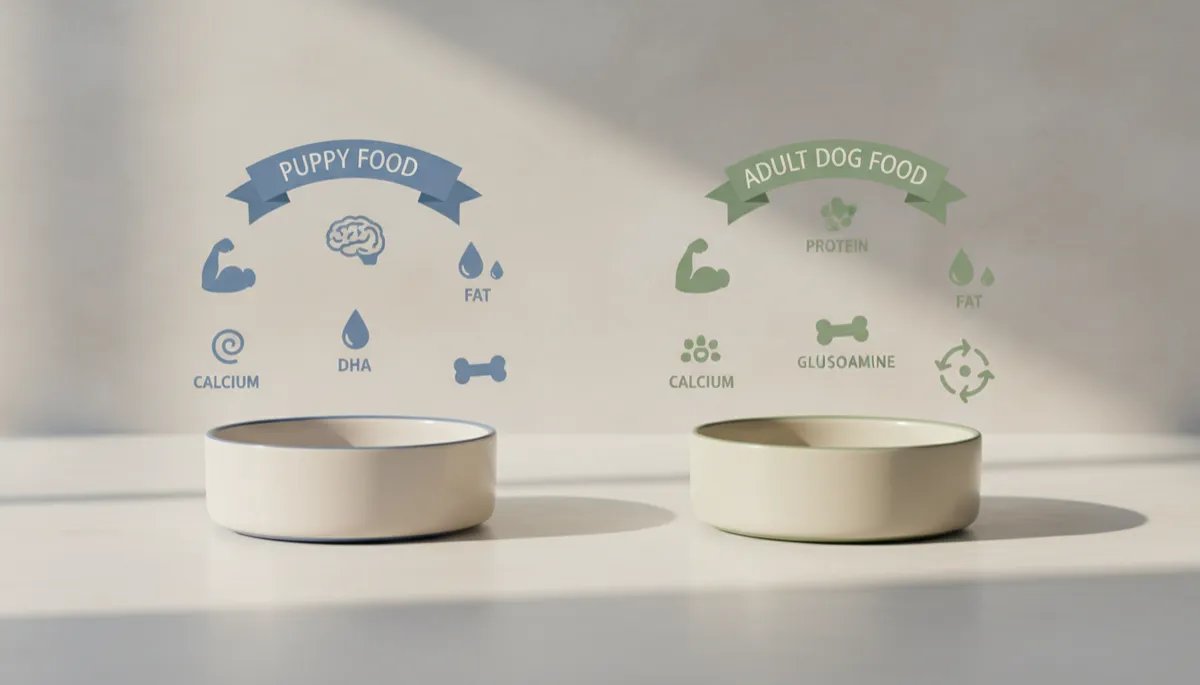
Puppy food prioritizes growth nutrients, while adult formulas focus on maintenance and joint support.
What Adult Dogs Need
Once your dog is done growing, the goal of their diet shifts from “build a body” to “maintain a healthy body.” Adult dog nutrition is all about steady energy, lean muscle, joint health, and keeping a healthy weight. This is where puppy food vs adult dog food really starts to differ.
Protein: 18–25% for maintenance
Adult dogs generally do well with around 18–25% protein. This supports muscle maintenance and daily activity without overshooting their calorie needs. Quality still matters—look for identifiable animal protein sources on the label, not just vague “meat by-products.”
Fat: 5–15% for steady energy and weight control
Adult dogs are typically less calorie-hungry than puppies. A balanced adult formula usually has 5–15% fat. Active dogs may do better on the higher end of that range, while couch potatoes or smaller dogs in apartments might need something closer to the lower end to avoid weight gain.
Glucosamine and joint support
Many adult and especially “joint health” formulas include glucosamine and sometimes chondroitin to support cartilage and joint function. This can be especially helpful for larger breeds or very active dogs who put more stress on their joints, and it’s one of the big differences you’ll see when comparing puppy nutrition to adult dog nutrition.
Antioxidants and immune support
Adult formulas often highlight antioxidants like vitamins C and E, plus ingredients such as blueberries or spinach. These help protect cells from everyday wear and tear and support long-term health, especially as your dog moves toward their senior years.
Fiber for digestion and stool quality
Fiber helps keep your dog’s digestion regular and their stools well-formed (yes, we talk about poop a lot in dog training). Adult foods often contain moderate fiber from ingredients like beet pulp, pumpkin, or certain grains to support gut health without causing excessive gas or loose stools.
When to Switch from Puppy Food to Adult Dog Food
One of the most common questions we get at MJacksonk9 is, “When should I switch my puppy to adult food?” The answer depends a lot on your dog’s breed size, because small dogs finish growing much sooner than large or giant breeds. Here’s a general guideline:
Breed Size | Approximate Adult Weight | When to Switch to Adult Food |
|---|---|---|
Small breeds | Under 20 lbs | Around 9–12 months |
Medium breeds | 20–50 lbs | Around 12 months |
Large breeds | 50–90 lbs | Around 12–18 months |
Giant breeds | Over 90 lbs | Around 18–24 months |
These are starting points; your vet can help you decide the best timing based on your individual dog’s growth and body condition. For more detailed life-stage guidance, the AKC nutrition guide is a helpful resource.
How to transition over 7–10 days
Once you’ve decided it’s time to move from puppy nutrition to adult dog nutrition, go slowly. A gradual transition helps prevent tummy upset and gives your dog time to adjust to the new flavor and texture.
Days 1–3: 75% old (puppy) food, 25% new (adult) food
Days 4–6: 50% old food, 50% new food
Days 7–10: 25% old food, 75% new food, then move to 100% new food if everything looks good
📌 Watch for: vomiting, diarrhea, or a big drop in appetite. Mild stool changes can be normal during a switch, but anything severe or persistent is a sign to slow down and talk to your vet.
A Special Note on Large Breed Puppies
Large and giant breed puppies are a whole different ballgame. Their growth period is longer, and they’re more prone to joint issues like hip dysplasia. That’s why large breed puppy nutrition is such an important topic—and why you’ll often see foods specifically labeled for large breed puppies.
These formulas are designed to support a slower, steadier growth rate with carefully controlled calcium, phosphorus, and calories. Overfeeding a large breed puppy, even with the right food, can increase the risk of orthopedic problems later on. Keeping them lean as they grow is one of the best gifts you can give their future adult joints.
If you share your home with a large or giant breed puppy in Brooklyn, this is definitely an area where it’s worth checking in with your vet or a board-certified veterinary nutritionist. The team at Tufts Vet Nutrition shares excellent science-based information if you want to dive deeper.
FAQ: Puppy vs. Adult Dog Nutrition
1. Can I feed my puppy adult dog food?
It’s not ideal. Adult dog nutrition is formulated for maintenance, not growth. Feeding adult food to a young puppy can mean they’re missing out on the higher protein, fat, DHA, and carefully balanced minerals they need for healthy development. In a pinch, a short period on an “all life stages” food that meets AAFCO growth standards is usually okay, but for routine feeding, choose a proper puppy formula—especially for the first 6–12 months.
2. What if my dog refuses the new adult food during the transition?
Some dogs are suspicious of change (we get it). First, slow the transition down—stay at a lower percentage of the new food for a few extra days. You can also:
Add a splash of warm water or low-sodium broth to enhance aroma
Use part of their meal as training treats to build positive associations
Offer meals on a schedule and remove uneaten food after 15–20 minutes so grazing doesn’t become a habit
If your dog skips more than a meal or two, or seems unwell, call your vet before pushing the new food further.
3. Should I consult my vet before switching foods?
It’s always a good idea, especially if your dog has any health issues, is a large or giant breed, or has had digestive problems in the past. Your vet can help you time the switch correctly and may recommend specific brands or formulas that fit your dog’s medical and lifestyle needs. Think of your vet as part of your dog’s “nutrition team” alongside trainers like us at MJacksonk9.
Key Takeaways: Puppy Food vs Adult Dog Food
✅ Puppy nutrition is higher in protein and fat (about 22–32% protein, 8–20% fat) with added DHA and carefully balanced calcium and phosphorus for growth.
✅ Adult dog nutrition focuses on maintenance (around 18–25% protein, 5–15% fat), healthy weight, joint support with glucosamine, and antioxidants plus fiber for digestion.
✅ Timing for when to switch puppy food to adult food depends on breed size: small dogs around 9–12 months, medium at 12 months, large at 12–18 months, and giant breeds at 18–24 months.
✅ Always transition gradually over 7–10 days to protect your dog’s stomach and help them accept the new food.
✅ Large breed puppy nutrition is extra sensitive—choose a large breed puppy formula and keep them lean to protect their joints.
Need Help with Your Puppy’s Routine? Talk to MJacksonk9 in Brooklyn, NY
Nutrition is just one piece of raising a happy, well-behaved dog—but it’s a big one. The right food makes training easier, supports better focus, and keeps your pup feeling their best as they grow into a confident adult. If you’re in Brooklyn and feeling a little overwhelmed by all the choices, you’re not alone. We talk about food, schedules, and routines with our clients every day.
If you’d like personalized guidance on your dog’s daily routine—feeding times, potty breaks, training sessions, and everything in between—reach out to MJacksonk9 in Brooklyn, NY. We’ll help you build a plan that fits your dog’s nutritional needs and your real-life schedule, so you can enjoy more of the fun parts of life with your dog.
Ready to get started? Contact MJacksonk9 today to book a consultation and set your puppy—or adult dog—up for a lifetime of good habits and good health.
Author: MJacksonk9 | Professional Dog Trainers, Brooklyn, NY


