Essential Puppy Training Tips for New Owners - Copy
Puppies, Dog Training, New Owners
Essential Puppy Training Tips for New Owners
Welcoming a puppy home is a little like inviting a tiny, furry tornado into your living room—adorable, hilarious, and slightly chaotic. With the right training plan (and a sense of humor), you can turn that chaos into a well-mannered best friend. This guide from Michael Jackson Dog Training LLC walks you through the essential puppy training tips every new owner needs to know.
Step One: Set Your Puppy Up for Success (Not Mischief)
Before you teach a single cue, you need a game plan. Puppies don’t arrive knowing the difference between a chew toy and your favorite sneakers. Your job is to make the right choices easy and the wrong choices almost impossible—kind of like puppy-proofing your life.
Use baby gates or exercise pens to limit access to trouble zones like closets, kids’ rooms, or that oh-so-chewable shoe rack.
Keep counters clear—if your puppy never learns that the counter magically dispenses pizza, they won’t keep checking it “just in case.”
Provide plenty of legal chewing options: rubber toys, safe chews, and puzzle feeders to keep that busy brain working on the right things.
💡 Pro Tip: Think of your puppy like a toddler with superpowers and teeth. If they can reach it, they will explore it—so plan accordingly.
Crate Training: Your Puppy’s Cozy Den, Not Puppy Jail
When introduced correctly, a crate becomes your puppy’s safe, cozy den—a place to relax, nap, and chew in peace. At Michael Jackson Dog Training LLC, we treat the crate as a comfort zone, never a punishment corner. Used thoughtfully, it helps with house training, prevents destructive habits, and gives you a break when you need to answer emails without a furry intern “helping” on the keyboard.
Make it inviting. Add a soft blanket, a safe chew toy, and maybe a piece of clothing that smells like you (instant puppy comfort).
Start with open-door hangouts. Toss treats inside, feed meals in the crate, and let your puppy wander in and out freely at first. You’re building a “this place is awesome” association.
Short, sweet alone time. Close the door for a few minutes while you stay nearby, then gradually increase time and distance. Calm exits and returns keep things low drama.
📌 Key Takeaway: The crate should always predict good things—meals, treats, naps—not scolding or time-outs after misbehavior.
House Training: Fewer Accidents, More Happy Dances
House training is where many new owners start to question their life choices. The good news? With structure and consistency, your puppy can learn where to “go” surprisingly fast. The secret formula is simple: supervise, schedule, and celebrate.
Take your puppy out frequently: after waking, after eating, after playing, and every 1–2 hours in between, depending on age. Tiny bladders have big ambitions but limited capacity.
Go to the same spot each time and quietly wait. When your puppy starts to go, softly say your cue (like “go potty”), then reward like they just solved world peace when they finish.
Indoors, keep your puppy on a leash or within sight. If you can’t watch, use the crate or a small puppy-proofed area to prevent unsupervised accidents.
⚠️ Oops Happens: If your puppy has an accident, clean it thoroughly and move on. Scolding after the fact only confuses them—they can’t connect your frustration with something that happened even seconds ago.
Positive Reinforcement: Pay Your Puppy for the Job You Want
At Michael Jackson Dog Training, we’re big believers in positive reinforcement—rewarding the behaviors you love so your puppy eagerly repeats them. Think of treats, toys, and praise as your puppy’s paycheck. No one works for free, and your puppy is no exception.
Keep rewards small and tasty so you can use lots of them without overfeeding—pea-sized treats are perfect for tiny mouths and big enthusiasm.
Reward instantly. The faster the treat appears after the behavior, the clearer the message: “Yes, that! Do that again!”
Mix in verbal praise and petting, but remember that for many puppies, food is the VIP reward that really makes training click.
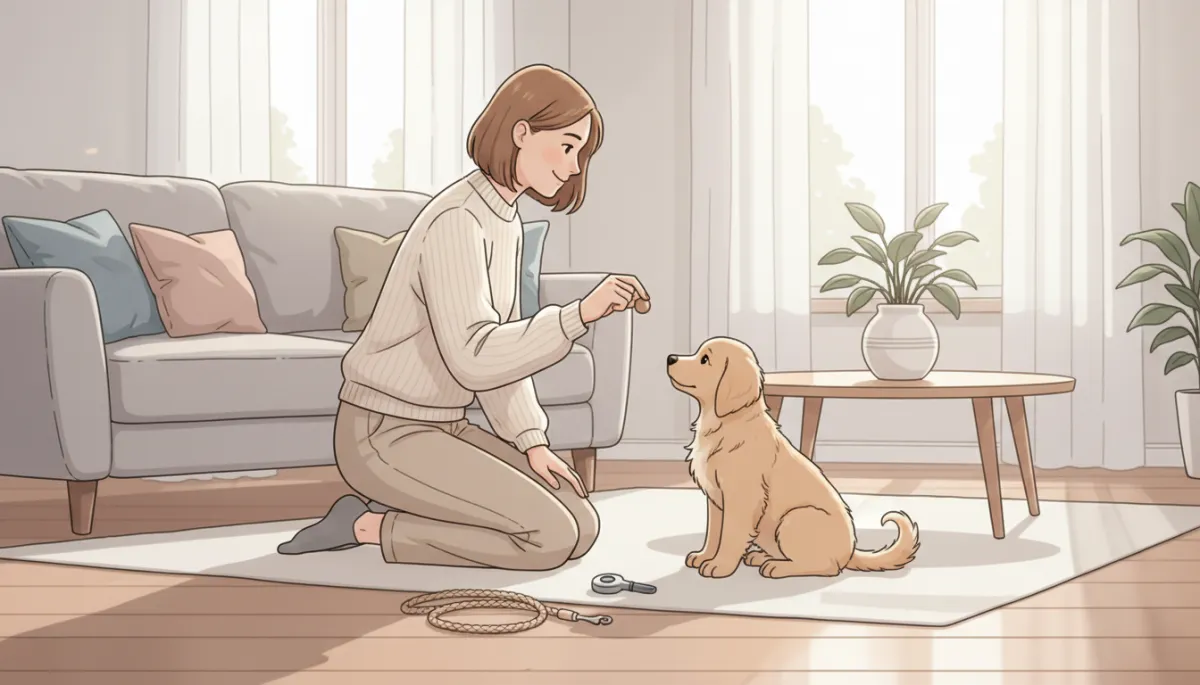
Rewarding calm, polite behavior teaches puppies that good manners really pay off.
Teaching the Core Cues: Sit, Down, Stay, and Come
Fancy tricks are fun, but the real magic is in the basics. Core cues like sit, down, stay, and come keep your puppy safe and polite in everyday life—from greeting guests to walking near busy streets. The best part? Puppies learn these quickly when you keep sessions short, upbeat, and full of rewards.
Sit: The Polite Puppy Default
Hold a treat just above your puppy’s nose and slowly move it back over their head. As their nose follows, their bottom usually drops. The moment it hits the floor, say “sit” and reward. Soon, your puppy will start offering sits on their own—perfect for calm greetings instead of trampoline-style jumping.
Down: Relax Mode Activated
From a sit, bring a treat down to the floor between your puppy’s front paws, then slowly move it out along the ground. As they follow the treat, their body will stretch into a down. Mark it with “yes” or a click, then reward. Down is your best friend at coffee shops, vet offices, or anytime you’d like your puppy to chill instead of tap-dancing on the furniture.
Stay: Because Doors and Driveways Exist
Ask for a sit or down, then show your puppy a flat hand like a “stop” signal and say “stay.” Take a tiny step back, then return and reward. At first, we’re talking half a second of staying—blink and you’ll miss it. Gradually add time, distance, and distractions, always setting your puppy up to win. A solid stay is worth its weight in gold when the front door opens or a squirrel zips by.
Come: Your Emergency Superpower Cue
Start indoors with a long line or in a fenced area. Crouch down, open your arms, and cheerfully call your puppy’s name followed by “come!” When they head your way, make a big fuss—treats, praise, maybe a quick game of tug. You want your puppy thinking, “Running to my human is the best decision I make all day.”
💡 Pro Tip: Never call your puppy to you for something unpleasant, like ending play at the park. Go to them instead. “Come” should always predict something awesome.
Socialization: Raising a Confident, Friendly Dog
Socialization is more than puppy play dates—it’s your puppy’s crash course in “how the world works.” During the critical socialization window (roughly 8–16 weeks), your puppy is forming lifelong opinions about people, animals, sounds, and places. At Michael Jackson Dog Training LLC, we focus on positive, controlled exposure so puppies grow into confident, adaptable adults instead of nervous wrecks or over-the-top greeters.
Introduce your puppy to people of different ages, sizes, and appearances: hats, glasses, wheelchairs, strollers, and all. Pair each new encounter with treats and praise so strangers equal “snack time,” not stress time.
Let them explore various surfaces—grass, gravel, carpet, tile—so your puppy doesn’t freeze at the first shiny floor they see in a vet clinic or store.
Expose them to everyday sounds gradually: vacuum cleaners, doorbells, traffic, even the hair dryer. Start at a distance or low volume, feed treats, and slowly work closer as your puppy stays relaxed.
⚠️ Watch Their Body Language: If your puppy tucks their tail, hides, or refuses treats, give them space and slow things down. Socialization should feel like a fun field trip, not a horror movie.
Biting, Nipping, and Chewing: Tiny Teeth, Big Feelings
Puppy teeth are like little shark fins attached to a fluff ball. Nipping is normal puppy behavior, but that doesn’t mean your fingers have to be permanent chew toys. Your goal is to teach bite inhibition and redirect that urge onto appropriate items instead of your skin, shoes, or furniture.
When your puppy bites too hard, let out a brief “ouch,” then calmly remove your attention for a few seconds. You’re sending the message: “Biting too hard makes the fun stop.”
Immediately offer a chew toy or tug toy as a legal outlet. Reward them for chewing the right thing like it’s the best decision they’ve ever made.
Avoid rough play that encourages biting at hands or clothes. Tug is great if you have clear rules: teeth on toy = game on, teeth on skin = game ends.
Leash Skills: Turning Walks from Chaos into Calm
Without guidance, puppies treat the leash like a bungee cord and the sidewalk like a racetrack. Teaching loose-leash walking early saves your shoulders and your patience. The goal isn’t a military heel; it’s a relaxed walk where your puppy checks in with you and the leash stays slack most of the time.
Start indoors or in your yard where distractions are minimal. Reward your puppy for walking beside you, even for a step or two, with treats delivered right by your leg.
If they pull forward, simply stop. Wait for the leash to slacken or for your puppy to turn back toward you, then move again. Pulling never gets them where they want to go faster—only polite walking does.
Use a comfortable harness instead of a collar for young puppies to protect their neck and make guiding them gentler and safer.
Consistency: The Secret Sauce of All Puppy Training
Puppies are brilliant at noticing patterns—and equally brilliant at exploiting loopholes. If “off the couch” only matters when you’re wearing your work clothes, your puppy will figure that out faster than you can say “dog hair everywhere.” Consistency from every family member keeps training clear and fair.
Agree on house rules: Are couches allowed? Beds? Which rooms are off-limits? Everyone should follow the same plan so your puppy isn’t getting mixed messages.
Use the same cue words: “Down” and “off” should mean different things, so decide as a family which word means what and stick to it.
Schedule short, daily training sessions—five minutes here and there adds up quickly and keeps learning fun instead of overwhelming.
When to Call in a Professional Trainer (Hint: Sooner Is Better)
You don’t have to wait for big problems to appear before working with a trainer. In fact, bringing in professional help early is one of the best gifts you can give your puppy—and yourself. At Michael Jackson Dog Training, we specialize in guiding new owners through everything from basic manners to early signs of anxiety, reactivity, or destructive behavior before they spiral into bigger issues.
If your puppy is showing intense fear, guarding food or toys, growling regularly, or struggling with separation, that’s your cue to get expert support. Balanced, humane, and evidence-based training can steer your puppy back on track and protect that precious bond you’re building together.
💬 Need Backup? Book a time to chat and start your dog’s training journey today with Michael Jackson Dog Training. We’ll help you create a tailored plan that fits your puppy’s personality—and your real life.
Bringing It All Together: Raising Your Dream Dog
Training a puppy can feel like juggling squeaky toys, leashes, and treat bags all at once—but it’s also one of the most rewarding projects you’ll ever take on. Every sit, every successful potty break, every wiggly recall is a tiny brick in the foundation of a lifelong friendship. When you use positive reinforcement, clear boundaries, and a generous dose of patience, you’re not just teaching skills—you’re building trust.
Remember the essentials: set up the environment so good choices are easy, use the crate as a safe den, stick to a potty schedule, reward the behaviors you love, and socialize thoughtfully so the big wide world feels like an adventure, not a threat. Layer in basic cues, leash manners, and consistent rules, and suddenly that wild little whirlwind starts looking a lot like your dream dog in progress.
At Michael Jackson Dog Training, our mission is to unlock every dog’s potential with humane, balanced training that fits real families and real schedules. Whether you’re celebrating your puppy’s first “sit” or wondering why they just zoomed through the house for the fifth time today, you don’t have to figure it out alone. We’re here to guide you, cheer you on, and make the process as fun as your puppy thinks life already is.
Ready to turn your cute chaos gremlin into a well-mannered sidekick? Book a time to chat and start your dog’s training journey today. Your future self—and your future well-behaved dog—will thank you every time you clip on the leash and head out into the world together.


