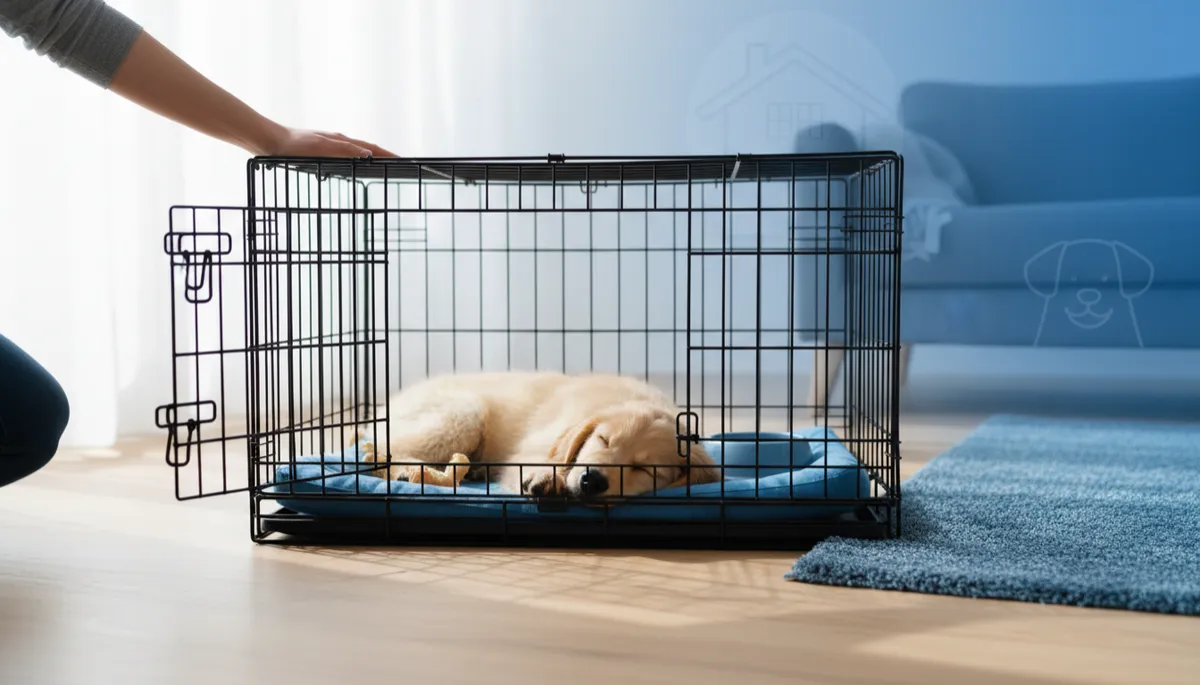
Crate Training a Puppy: Kind and Effective Guide
Dogs, Puppies, Crate Training, Puppy House Training
Crate Training a Puppy: Why It’s Not Cruel and How to Do It Right
Wondering if crate training your new puppy is cruel? You’re not alone. Let’s walk through what crate training really is, why it helps, and how to do it in a kind, puppy-friendly way that makes life easier for both of you.
Let’s be honest: the first time someone suggests crate training a puppy, it can feel harsh. You might picture a tiny pup “locked up” and think, is crate training cruel? The good news is that, when it’s done correctly, crate training is not only not cruel, it’s one of the kindest things you can do for your new dog.
Is Crate Training Cruel? Let’s Debunk the Big Myths
Before we talk about the benefits of crate training your new puppy, we need to clear up the biggest fears new puppy owners have. Most of the time, crate training gets a bad reputation because of how it’s used, not what it is.
Myth 1: “Crates are cruel or like jail.” A puppy crate is not a jail cell; it’s more like a bedroom or den. Dogs naturally seek out small, cozy spaces to relax. A crate, when introduced kindly, becomes a safe, predictable place where your puppy can rest and feel secure, not punished.
Myth 2: “Dogs hate crates.” Most dogs come to love their crate when it’s associated with treats, naps, and calm time. If a dog “hates” the crate, it’s usually because it was forced, overused, or only used when something bad was happening (like being yelled at or left for too long).
Myth 3: “Crates cause anxiety.” A properly introduced dog crate can actually reduce anxiety by giving your pup a predictable, quiet retreat. Anxiety usually comes from isolation, lack of structure, or being crated too long, not from the crate itself.
Myth 4: “It’s okay to crate all day.” This one is dangerous. Long, all-day crating is unfair and can be harmful. Crate training a puppy is about short, reasonable stretches paired with exercise, play, and connection – not parking them in a box for 8–10 hours straight.
Myth 5: “Crates are only for punishment.” If the crate is only used when your puppy is “bad,” of course they’ll hate it. The crate should be a puppy safe space, not a “time-out corner.” Think: snacks, chew toys, naps – not scolding.
💡 Quick mindset shift: Don’t think “locking my dog up.” Think “giving my puppy a calm, safe den where they can relax and learn good habits.”
Real Benefits of Crate Training Your New Puppy
Once you move past the myths, the benefits of crate training are huge – for you and your puppy. Here’s what thoughtful crate training a puppy can do:
Easier puppy house training (potty training). Puppies naturally try not to soil the space where they sleep. Using the right crate size and a consistent schedule teaches your puppy to “hold it” and go outside, not on your rug.
Prevents chewing and accidents when you can’t watch. A puppy loose in the house is basically a toddler with scissors. A dog crate keeps them safe from wires, shoes, and furniture when your eyes are elsewhere for a short time.
Reduces separation anxiety later. Teaching your puppy to relax alone in a crate now can make it easier for them to be calm when you leave the house in the future. It creates a routine around alone time that feels normal, not scary.
Makes travel, vet visits, and emergencies less stressful. If your dog already sees a crate as a safe place, car rides, boarding, and even emergency evacuations are much less traumatic. The crate becomes something familiar in unfamiliar situations.
Helps your puppy learn to settle. Many puppies struggle to “turn off.” Crate time teaches them that it’s okay to rest, nap, and be calm – which makes for a more relaxed adult dog.
Organizations like the American Kennel Club and the ASPCA also support crate training as a humane, effective tool when done correctly.
How to Choose the Right Puppy Crate and Crate Size
A big part of making crate training your new puppy feel kind is choosing the right crate and setup. The wrong crate size or layout can make your puppy uncomfortable or more likely to have accidents.
Your puppy should be able to stand up, turn around, and lie down comfortably – but not have so much extra space that they can potty in one corner and sleep in another.
For growing puppies, a wire crate with a divider is perfect. You can expand the space as they grow without buying multiple crates.
Add a comfy bed or mat in black, white, or blue (#0576F7), plus a safe chew toy to make it feel inviting and cozy.
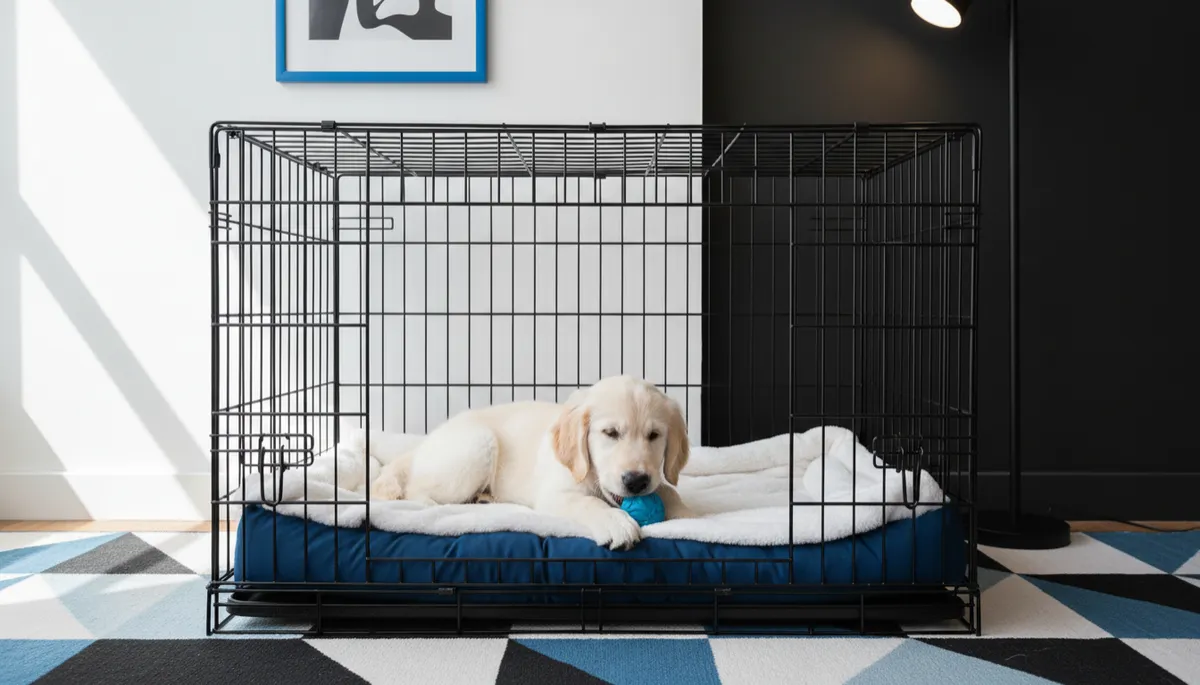
The right crate size and cozy setup turn training into a calm, positive routine.
Gentle Puppy Crate Training Tips: Step-by-Step
Now let’s get practical. Here’s how to start crate training a puppy in a way that feels good for both of you.
Make the crate a “yes” place. Leave the door open at first. Toss treats inside, feed meals in the crate, and let your puppy wander in and out. Use a happy, relaxed voice. You want your puppy to think, “Good things happen in here.”
Start with short, calm sessions. Once your puppy is comfortable going in, close the door for a minute or two while you sit nearby. Gradually build up the time, always letting them out before they panic or get overwhelmed.
Pair crate time with naps. Puppies sleep a lot. Use that to your advantage. When your pup is already drowsy, guide them into the crate with a treat and a chew, then let them nap there. This helps them associate the crate with rest and comfort.
Avoid dramatic exits and entrances. When you let your puppy out, keep it low-key. If you throw a party every time the door opens, they’ll be more focused on escaping than relaxing inside.
Never use the crate as punishment. If your puppy misbehaves, address it separately – don’t just march them to the crate. You want them to feel safe going in, not worried they’re “in trouble.”
💡 Pro tip: If your puppy whines, pause and ask, “Do they need a potty break, or are they protesting?” Don’t rush to let them out every time they make a sound, or they’ll learn whining = door opens. Wait for a brief quiet moment, then calmly let them out.
Puppy House Training: Using the Crate for Potty Training Success
One of the biggest benefits of crate training is how much it speeds up puppy house training. Here’s how to connect crate time and potty training in a way that makes sense to your pup.
Take your puppy outside immediately after they come out of the crate – same door, same spot, same cue word (like “Go potty!”).
When they go, celebrate: gentle praise, a tiny treat, then a few minutes of playtime. This teaches them that going outside is rewarding and fun.
Keep crate stretches short enough that your puppy can realistically hold it. Very young pups may need to go out every 2–3 hours during the day, plus right after eating, drinking, and playing.
The Humane Society also recommends crate training as part of a consistent potty training routine, as long as it’s paired with frequent breaks and positive reinforcement.
How Long Can a Puppy Stay in a Crate? Safe Time Limits
One of the most common questions new owners ask is how long a puppy can stay in a crate. This is where the “is crate training cruel” concern really shows up – and it’s a fair question.
A rough guideline: a puppy can usually hold it for about their age in months plus one hour (so a 3‑month-old pup = about 4 hours max, during the day).
Very young puppies (8–10 weeks) may need breaks every 2–3 hours, even at night at first.
Long workdays with no breaks and your puppy crated the whole time? That’s where we cross into unfair territory. If you’re gone all day, consider a dog walker, neighbor, or dog daycare to give your pup a mid-day break.
⚠️ Important: Crate training your new puppy should never mean “crate all day, every day.” Think of the crate as one tool in your puppy routine, not the whole plan.
Crate Training and Separation Anxiety: Help, Not Harm
Another big worry is that crates cause separation anxiety. In reality, when you introduce a dog crate slowly and kindly, it can actually protect your puppy from developing full-blown anxiety about being alone.
Practice very short absences at first: crate your puppy, step into another room for a minute, then come back calmly. Gradually build up time so it feels normal, not scary.
Offer a safe chew or stuffed toy (nothing they can choke on) so they have something to do and associate alone time with something positive.
If your puppy shows intense panic – nonstop screaming, drooling, trying to escape – it’s time to slow down and likely get professional help. A skilled trainer can help you tell the difference between normal protest and real anxiety.
Key Takeaways and Next Steps: Crate Training Help in Brooklyn, NY
Let’s quickly recap what we’ve covered so you can feel confident about crate training your new puppy:
Crate training a puppy is not cruel when the crate is a safe, cozy space – not a jail or punishment.
The benefits of crate training include faster puppy house training, fewer accidents, less destruction, and a calmer, more confident dog.
Crates don’t cause anxiety on their own – misuse does. Reasonable time limits, positive associations, and plenty of exercise are the keys.
It is not okay to crate all day. Your puppy needs bathroom breaks, play, training, and connection with you.
With the right puppy crate training tips and a little patience, your dog’s crate can become their favorite place to relax.
If you’re in Brooklyn, NY and feeling unsure about where to start – or you’ve already hit some bumps with crate training, puppy house training, or separation anxiety – you don’t have to figure it out alone.
Contact Us at MJacksonk9 for personalized puppy training help. We offer:
Obedience training to build solid manners from day one
Puppy classes focused on socialization, crate training, and potty training
Behavioral correction for problem chewing, barking, or anxiety issues
1‑on‑1 training tailored to your dog, your home, and your lifestyle
Ready to turn crate training from stressful to simple? Reach out to MJacksonk9 in Brooklyn today, and let’s help your puppy grow into a confident, well‑behaved dog you’ll be proud to take anywhere.


