Understanding the Balanced Training Method: What It Is and Why It Works (2026 Guide)
Vet disclaimer: This article is for education only and is not a substitute for advice from a licensed veterinarian. If your dog shows aggression, sudden behavior changes, or signs of pain, please see your vet before starting any training program.
If you've ever searched for dog training in Brooklyn, you've probably run into the term balanced training method and wondered what it really means. Is it harsh? Is it all treats? Something in between? I'm Michael Jackson, and after 15 years of working with every breed and temperament, I'll explain it the way I would over coffee. In this 2026 guide, you'll learn what balanced dog training is, why it works for so many families, where the debate sits, and how to decide if it fits your dog.

What Is the Balanced Training Method?
The balanced training method pairs rewards for the behavior you want with fair, clear guidance when your dog makes a choice you don't want. Instead of leaning on one single tool, a balanced trainer uses a full toolbox: praise, treats, toys, leash guidance, a calm "no," and plenty of structure.
Think about teaching a kid to ride a bike. You cheer when they pedal well, and you also say "whoa, watch the curb" when they drift. Dogs need the same two things: encouragement and boundaries.
"Balanced" doesn't mean harsh, and it doesn't mean permissive. At its best, it means reward-heavy, communication-first dog obedience training where your dog always understands what's being asked. In my sessions, rewards lead the way, and guidance is the exception, never the headline.
The Four Quadrants in Plain English
Balanced training grows out of operant conditioning, the science of how consequences shape behavior. The American Kennel Club's guide to operant conditioning breaks it down well. Here's the jargon-free version: "positive" means adding something, "negative" means taking something away, "reinforcement" makes a behavior more likely, and "punishment" makes it less likely.
- Positive reinforcement: you add something good, so you get more of the behavior. Your dog sits, and you hand over a treat.
- Negative punishment: you take away something good, so you get less of the behavior. Your dog jumps, and you turn away and withdraw your attention.
- Negative reinforcement: you remove light pressure when your dog gets it right. The leash tension eases the moment your dog stops pulling.
- Positive punishment: you add something unpleasant to get less of a behavior, such as a firm verbal correction.
Trainers who use only rewards stick mostly to the first two. Balanced trainers are open to all four, but the good ones lean heavily on rewards and use the rest sparingly, with careful timing.
Why the Balanced Training Method Works
Here's why so many owners see results with this approach. At its core, dogs don't speak English. They read consistency, timing, and consequences, and a balanced approach gives them all three in a language they can actually understand.
- It's clear. Rewards tell your dog "yes, that one." Calm guidance tells them "not that one." When both messages are consistent, dogs sort out the rules faster and stress less about guessing.
- It holds up in real life. Your living room is quiet. Brooklyn sidewalks aren't. Sirens, squirrels, and other dogs test every command, so behaviors need to be practiced around distance, duration, and distraction.
- It builds motivation and calm. Rewards create an eager, confident dog. Structure and boundaries create a settled one. You want both.
- It gives you a plan for every moment. When the treat pouch is at home or your dog is too excited to eat, you still know what to do.
- It's customizable. A sensitive rescue and a pushy adolescent Lab need different mixes, so the balance shifts with the dog in front of you.
What the Experts Say: Both Sides of the Conversation
I'd be doing you a disservice if I pretended this topic is settled, because it isn't. The American Veterinary Society of Animal Behavior, for example, recommends reward-based methods only and advises against aversive tools. Many working trainers disagree about how much of the toolbox is necessary, especially for tougher cases.
Here's where I land. Whatever label a trainer uses, look for the same green flags: they explain their methods openly, they never use fear or intimidation, your dog looks relaxed and eager, and you're welcome to watch. If a method makes your dog shut down, it isn't working, no matter what it's called.

What a Balanced Training Session Looks Like
- Meet and evaluate. We watch how your dog handles stress, excitement, and new people.
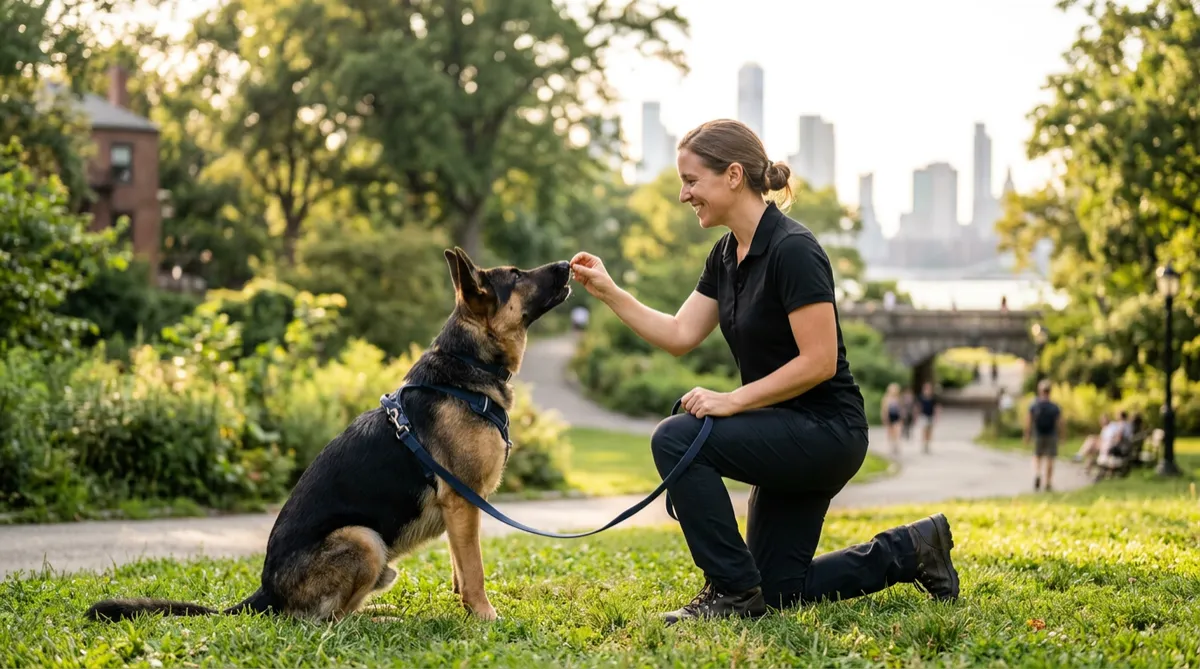
- Teach with rewards first. New skills like sit, down, and come start with treats, toys, and praise.
- Add structure. Once your dog understands, we set fair boundaries and clear expectations.
- Proof it outside. We practice around real distractions, step by step.
- Coach you. You leave knowing exactly what to do at home, because you're half the team.
This is the flow behind our puppy, obedience, and behavior correction programs.
Is Balanced Dog Training Right for Your Dog?
It's often a great fit for dogs that pull on the leash, jump on guests, ignore recall, or test limits as adolescents. It also suits owners who want dependable manners around distractions.
It's not a one-size-fits-all answer. Dogs with extreme fear, severe aggression, or medical problems may need a veterinary behaviorist alongside a trainer. Puppies need even lighter guidance, with mostly rewards and socialization. When in doubt, start with your vet and a conversation with a trainer you trust.
How to Practice the Balanced Training Method at Home
You don't need a fancy setup. A few simple habits make a huge difference between lessons.
- Keep sessions short. Five to ten focused minutes, a few times a day, beat one long, tiring session.
- Mark the moment. Use a word like "yes" the instant your dog gets it right, then deliver the reward right after.
- Set one family rulebook. If the couch is off-limits, it's off-limits for everyone, every day.
- Exercise first. A walk or a game of fetch before training helps your dog focus.
- Reward calm. Catch your dog lying quietly and pay them for it. Calm behavior grows when you notice it.
Small, consistent wins add up quickly. Within a couple of weeks, most owners notice their dog checking in with them more often.
How to Choose a Balanced Dog Trainer
Dog training is an unregulated field, so the trainer you pick matters as much as the method. Ask how they handle a dog who's struggling, what tools they use and why, and what progress should look like. Watch how the dogs in their care behave: loose bodies and wagging tails are a good sign. Finally, make sure they're happy to coach you, not just your dog, because your follow-through at home is what makes the training stick.
Common Mistakes to Avoid
- Being inconsistent. If jumping works sometimes, your dog will keep trying.
- Mistiming. Rewards and guidance work within seconds of the behavior.
- Skipping the rewards. Correction without encouragement leaves dogs confused.
- Expecting overnight results. Habits form through repetition.
- Overusing guidance. If you're correcting more than you're rewarding, the balance has tipped, so reset and go back to what your dog does right.
Every dog slips up, and so will you. What matters is that you notice, adjust, and keep your dog's trust at the center of everything you do.
Frequently Asked Questions
Is balanced dog training the same as punishment-based training?
No. Balanced dog training leads with rewards and uses fair guidance only when needed. Good balanced trainers keep guidance gentle, brief, and rare.
How long does the balanced training method take to work?
Most dogs show progress within a few weeks of consistent practice. Reliability around distractions takes longer, and your daily follow-through matters most.
Can puppies learn with the balanced training method?
Yes. Puppies mostly need rewards, socialization, and simple structure, and boundaries grow as they mature.
Should I talk to my vet before starting training?
Yes, especially with aggression, fear, or sudden changes. Pain can look like bad behavior, so rule it out first.
Ready for a Calmer, Happier Dog? Contact Us
Start with a 15-minute call. We'll meet your dog where they are and build a plan that fits your home.
Contact Us Today

